
The child welfare crisis in America was not born from a lack of resources, but rather the lack of communication between them. Children and families in crisis, community support organizations, and government agencies often work in silos, and as a result, kids and parents are often left without crucial services in their time of need. That’s why we partner with Restore Hope, a nonprofit that’s closing the gap in care, and their newest expansion is now underway in Iowa.
Here’s everything you need to know about Thrive Iowa:
- Restore Hope’s newest state partnership
- Launched in Spring 2026 in 11 counties across the state
- Rooted in a proven model that Restore Hope already operates in Arkansas
- Backed by evidence, data, and measurable outcomes
What is Thrive Iowa?
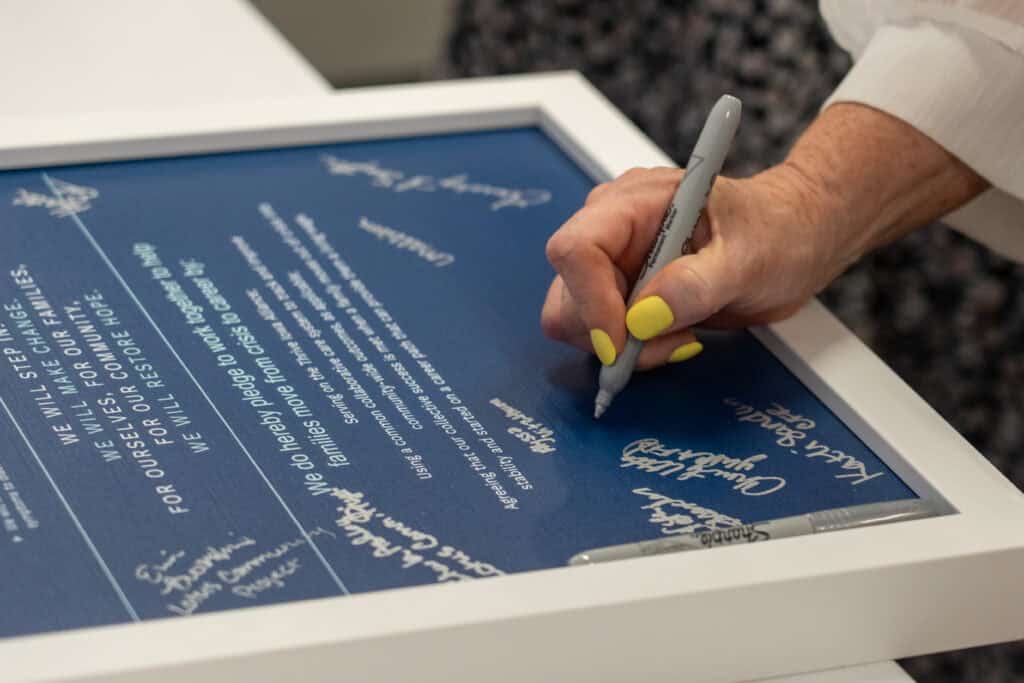
Thrive Iowa is a community-led initiative built on the collective impact model, an approach in which government agencies, nonprofits, and local organizations work toward the same outcomes using shared data rather than operating independently. Instead of asking a family to navigate multiple, disconnected services on their own, Thrive Iowa unites those services into a single system led by the community itself.
Each participant is paired with a Thrive Navigator, a local point person who links them to nearby resources, speaks up on their behalf, and keeps every provider involved in their case moving in the same direction. Behind the scenes, the network relies on HopeHub, Restore Hope’s secure case management software, which allows nonprofits, employers, faith groups, and government agencies to collaborate across 13 tracked areas of need, from housing and employment to childcare and recovery support.
This isn’t Restore Hope’s first time building this kind of network. It’s the same approach the organization has spent a decade refining, and Iowa is proof that the model can be implemented nationwide.
A model built on evidence, not guesswork
Restore Hope started in 2015, when a troubling rise in instability and incarceration among young families put family stability across Arkansas at risk. Founder and Executive Director Paul Chapman, working alongside then-Governor Asa Hutchinson, built a network of local partnerships that let Arkansas communities offer targeted support to families in crisis.
That model has since grown to serve 18 counties in Arkansas, and more than 550 residents completed a full “crisis to career” journey through the program in a single year. The reunification outcomes are just as notable: Restore Hope has reported reunification rates above 60% for birth parents and above 80% for kinship placements, compared to a statewide baseline of roughly 43%.
Those numbers are the reason For Others has featured Restore Hope’s work before, including how the model prevents families from encountering foster care in the first place, and how the organization approaches family preservation and reunification. We’ve also hosted multiple Vision Tours, bringing state leaders from across the country to Arkansas to see the model at work. Iowa’s leaders were among them, and after watching Restore Hope help families move from crisis to stability firsthand, they returned home wanting that same kind of change for their own communities. Thrive Iowa is the result.
Iowa’s rollout is already underway
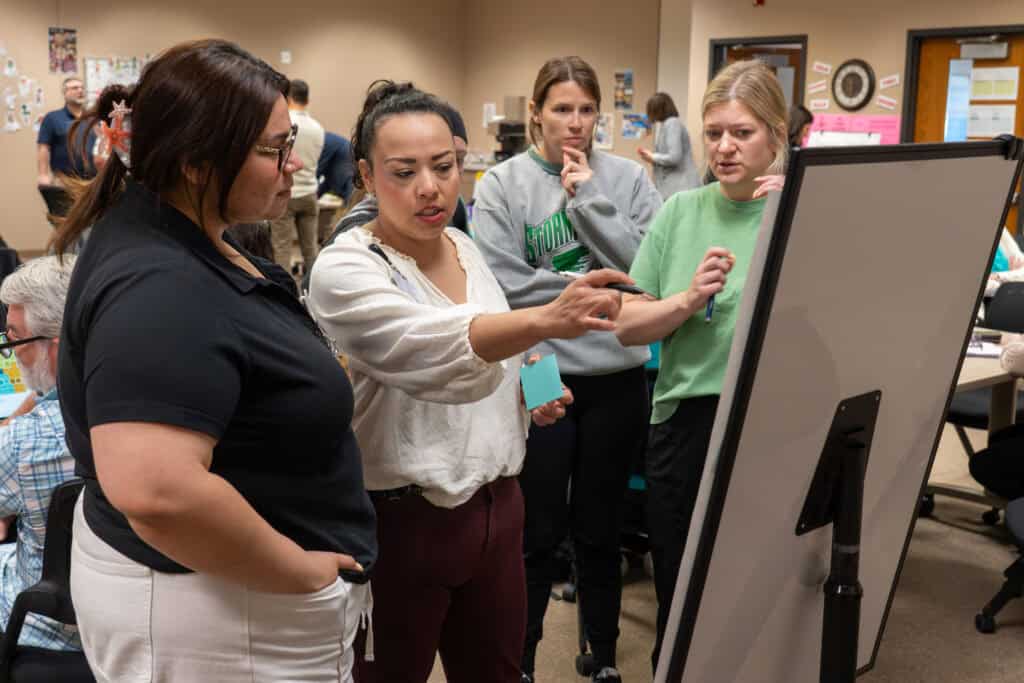
Thrive Iowa’s first collective impact meetings began this year, starting in southeast Iowa. In Fort Madison, community leaders from Lee, Van Buren, and Henry Counties gathered at the Lee County Health Department, which will anchor the effort for that trio of counties as the backbone organization tasked with coordinating partners and tracking shared progress. Northeast Iowa Community Action will take on that same role for Fayette and Clayton Counties.
Page Humphrey, Thrive Iowa’s State Director and community service bureau chief at Iowa Health and Human Services, called the launch an exciting milestone the team had anticipated for months, one she believes marks the start of something transformative for Iowa families in need.
Humphrey’s team chose the 11 counties in this first phase (Lee, Van Buren, Henry, Clayton, Fayette, Black Hawk, Buena Vista, Webster, Warren, Madison, and Cass) based on need, weighing factors like the number of children in foster care, families living in poverty, and local unemployment rates. In Lee County alone, more than 20 community partners submitted letters of support before the program even launched.
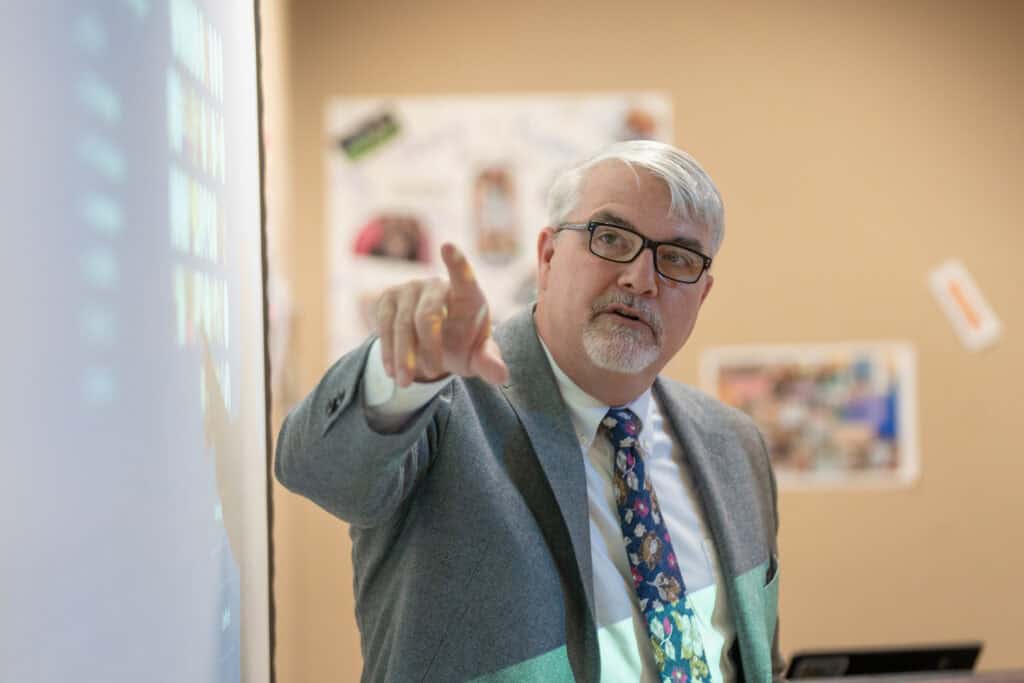
Paul Chapman traveled to several of the early meetings to explain why the model works, describing collective impact as a structured way for government and community groups to pursue the same goals using shared data and shared measurement of results.
On the ground, that structure comes to life through coordinators like Sarah Downard, who leads Thrive Iowa’s work in Warren and Madison Counties. Coordinators like Downard are the ones building local relationships, county by county, that make the collective impact model function as intended.
Why this expansion matters for donors
For Others exists to connect states with best-in-class nonprofit partners and to help those partners scale what already works. Restore Hope’s expansion into Iowa is a clear example of that mission in action: a state government choosing a partner not on promise, but on a track record it can point to.
When a program can show its reunification rates, count the families it has served, and demonstrate that the model holds up in a second state, it earns a different kind of trust. That’s the standard For Others holds every partner to, and it’s why we’re proud to stand behind Restore Hope as Thrive Iowa gets underway.
Restore Hope has spent a decade proving that families in crisis do better when their community’s resources work together instead of apart. Iowa is the next chapter in that story, and with your support, we can help write it. Be a part of the mission by making a donation today.
