
Women’s History Month marks a special time to celebrate the women in our lives and remember outstanding women from our past. The five influential women in foster care listed below believed in the value, dignity, and importance of children. They became champions of child welfare and made foundational changes to the system. We honor them and all women in foster care who have left a positive impact, whether big or small.
Fredericka Douglass Sprague Perry: Serving Black Children in Foster Care

Born in 1872, Fredericka Perry was the granddaughter of the famous abolitionist and author Frederick Douglass. The Douglass family pursued social and political reform over many generations, and Perry followed in their footsteps. Her husband opened the first private hospital for black individuals in Kansas City, Missouri. Perry worked at the hospital and also spent time as a teacher and a juvenile court worker.
During her time as a court worker, Fredericka witnessed firsthand the injustices that would inspire much of her philanthropy work. There, she saw the mistreatment of black children in the pre-Civil Rights foster care system. Rather than being put in foster or group homes, they were often detained in juvenile delinquency facilities and remained stuck there until they became legal adults.
To help address the need, Perry assisted several associations and organizations that supported black communities and children. She founded her first association in Missouri in 1923, which then opened a group home in 1934. The home provided housing for black girls in foster care and stayed open until states finally integrated black children into their child welfare programs in 1943. Multiple other organizations that championed civil, women’s, and children’s rights counted Perry as a member and partner. The state of Missouri owes a lot to Perry, who also penned the state song, “Show Me”.
Lillian D. Wald: The Birth of the Children’s Bureau

Lillian D. Wald was born in 1867 in Cincinnati, OH, but lived in New York City for much of her life. One of four children, Wald excelled at school and attended college to become a nurse. She first worked at an orphanage called the New York Juvenile Asylum while making further plans to become a doctor. However, one encounter with an ill mother in a rundown tenement building introduced her to the lack of affordable healthcare and quality living conditions for poor, often immigrant families. Women and children struggled particularly in an age where labor laws were scarce or unenforced, putting them at high risk for injury and illness.
With a new mission in her heart, Wald left medical school in 1893 and forged a brand new career path: a public health nurse. Her first big project, the founding of the Henry Street Settlement in 1895, provided healthcare for impoverished communities and eventually hosted children’s clubs, social gatherings, and career training. The Henry Street Settlement also provided a scholarship to help kids stay in school until their mid-teenage years.
Wald also advocated for laws protecting workers and particularly opposed child labor. She was a member of the New York Child Labor Committee and frequently campaigned to protect children from the workforce. Through her advocacy and that of several other women of the time, the United States Department of Labor added a Children’s Bureau. Parts of the current foster care system frequently fall under this department. Upon her death in 1940, many public figures stepped out to extol Wald’s accomplishments for the community.
Grace Abbott: Establishing Early Child Welfare Reform

In 1878, Grace Abbott was born in Nebraska to a relatively wealthy family. She performed well in school and eventually became interested in the many social issues plaguing the time. Throughout her life, she held the positions of teacher, social worker, and professor. She also championed many underprivileged communities, including children.
Abbott became the director of the Industrial Division within the Children’s Bureau in 1917. She enforced compliance with the child labor laws established the previous year. In 1921, she became chief of the Children’s Bureau and helped pass the Shephard-Towner Act. This act gave grants to child welfare programs for the first time in the nation’s history. Abbott also served as the US representative on the League of Nations‘ advisory committees on trafficking women and child welfare from 1922 to 1934.
Abbott was one of the first to recognize the importance of research and statistics to inform child welfare decisions, and as a result, she initiated many research projects to better inform new policies. Her work made waves during her time, and though she did not accept the position, she was the first woman nominated to the Presidential Cabinet.
Tiffany Wright: Championing Family Preservation and Reunification
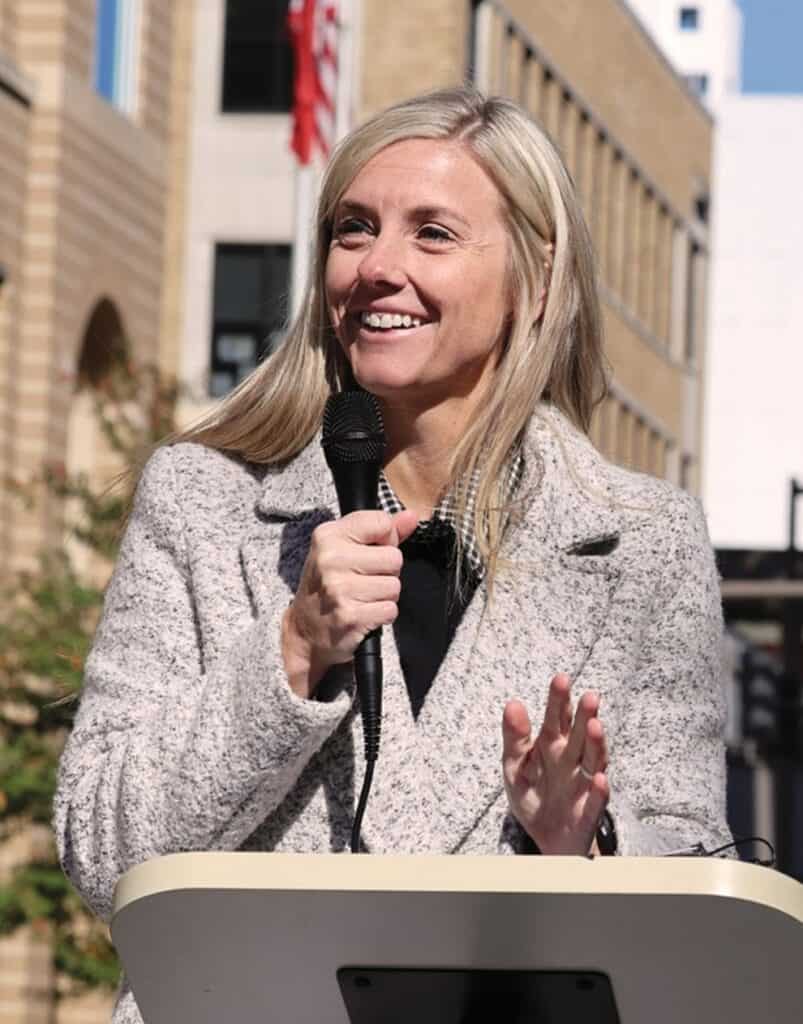
Tiffany Wright is the director of the Division of Children and Family Services (DCFS) in Arkansas. A seasoned leader with over a decade of experience, Wright oversees programs focused on child abuse prevention, foster care, family reunification, adoption, and child protection, leading a team of more than 1,000 employees across Arkansas. Since joining DCFS in 2009 as a family service worker, Wright has held multiple leadership roles, including Foster Care Program Manager, Foster Care and Adoption Program Administrator, and Assistant Director of Field Operations.
Recently, Wright began working with For Others and our partner, Restore Hope, whose 100 Families Initiative made waves in multiple Arkansas counties. Their model provides local support for kids and families in crisis, leading to fewer placements in foster care and more reunifications. Today, DCFS, other nonprofits, community members, and churches have joined forces to expand 100 Families statewide.
The results have been incredible. Some counties saw a 50% reduction in the number of children entering foster care and a 40% reduction in incarceration rates. Other states’ representatives have visited to learn more about the effective 100 Families Initiative, making Arkansas a leading figure in child welfare reform.
Simone Biles: A Modern Spokeswoman for Foster Care

Olympic gymnast Simone Biles was born in 1997 in Ohio. Her mother wrestled with addiction and became unable to care for her children. Her maternal grandparents, however, were more than happy to raise Biles and her three siblings as their own. The kids were sent to Texas, where they grew up with grandparents they came to think of as mom and dad. Their attentive love led them to sign little Simone up for gymnastics, noticing that she loved to move and possessed boundless energy. The rest is history.
Simone Biles loves her grandparents dearly and always had their support. Still, fellow foster youth have a soft spot in her heart, and much of her charity work and partnerships focus on providing resources and encouragement to young people in the foster care system.
Biles partnered with Friends of the Children and Axonius in 2022, as well as Mattress Firm Foster Kids. University of the People also teamed with the gymnast to create the Simone Biles Legacy Scholarship Fund to make higher education more affordable for foster children, among others.
Join the Mission of these Iconic Women in Foster Care
What do these women in foster care have in common? They were everyday people who saw a need and chose to act. Their work came from a place of compassion for vulnerable children and a strong sense of justice.
Many people have that same compassion and sense of justice. However, the child welfare system’s complexity makes it difficult to know where to start.
Thankfully, you don’t have to look far. There are multiple ways to help keep vulnerable children and families in your community, such as:
- Meeting a local need
- Volunteering
- Learning how to foster or adopt
- Donating
Each one makes a difference and gets us closer to ending the child welfare crisis in America for good. Start making a difference in your state today.
